

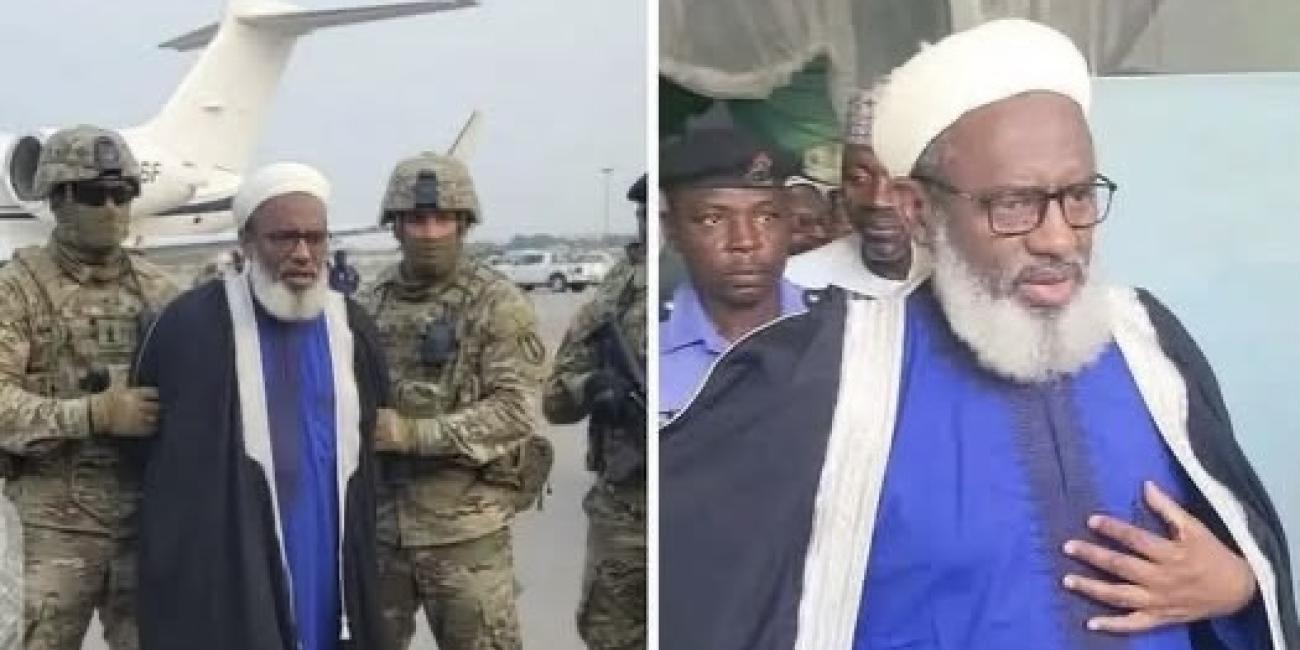
The claims emerged after an image, which went viral on Thursday, February 5, appeared online showing the cleric allegedly being apprehended at an airport by US troops.
Controversial Islamic cleric Sheikh Ahmed Gumi has denied claims and images circulating on social media suggesting that he has been arrested by United States military personnel in Nigeria.
The claims emerged after an image, which went viral on Thursday, February 5, appeared online showing the cleric allegedly being apprehended at an airport by US troops.
The image quickly spread, accompanied by narratives portraying the incident as part of an international counterterrorism operation involving foreign forces in Nigeria.
Speaking to SaharaReporters on Thursday by phone, Gumi denied reports of his arrest, questioning their logic.
“The US Army cannot arrest me in Nigeria, why will the US army come and arrest me in Nigeria, for what reason?” he said.
He also addressed the authenticity of the image that had circulated widely online, describing it as artificially created and misleading.
“The image is Artificial Intelligence (AI)-generated. Even a layman will know that the image is AI,” Gumi said, stressing that the visuals were fabricated and should not be taken seriously.
He concluded by reaffirming his status, “I have not been arrested,” making it clear that the viral reports were false and that he remained free in Nigeria.
The viral image was accompanied by a text alleging that Gumi had been apprehended U.S. military personnel at a Nigerian airport.
The text further claimed that the cleric was attempting to flee the country to Turkey amid suspicions linking him to terrorist groups and their operational camps.
Meanwhile, Gumi, a prominent Islamic cleric in Nigeria, has long been at the centre of public controversy due to his meetings with armed groups and statements perceived by many as justifying the actions of bandits.
In 2021, Gumi first drew intense national scrutiny when he began meeting with leaders of bandit groups in northwest Nigeria. The meetings were part of his efforts to negotiate the release of hostages taken in Kaduna, Zamfara and other affected states.
Some of these negotiations led to the release of captives, earning him praise from families of victims and local residents.
However, his actions also raised concerns within Nigeria’s security establishment. Critics and government officials argued that his direct contacts with armed groups, without formal oversight or coordination with security agencies, could be interpreted as providing tacit support to outlawed elements.
Despite repeated calls from some civil society groups and security experts for formal prosecution, as of 2026, Gumi has not been charged of terrorism‑related offences by any Nigerian court.
His supporters argue that his role has helped liberate hostages and open lines of dialogue, while critics insist that negotiating with violent groups without strict legal oversight can undermine national security efforts.