

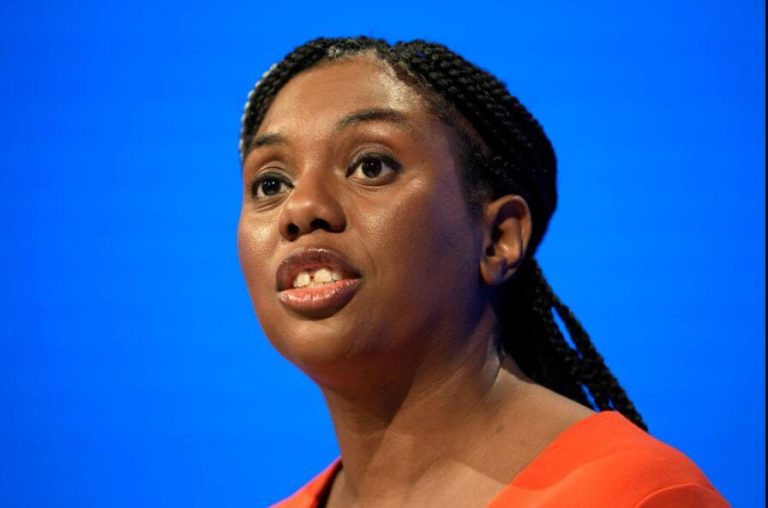
The leader of the UK Conservative Party, Kemi Badenoch
The leader of the UK Conservative Party, Kemi Badenoch, has questioned the decision of the United Kingdom to abstain from voting on a landmark resolution by the United Nations (UN) General Assembly declaring slavery and the transatlantic slave trade as one of the greatest injustices against humanity.
The resolution, adopted on Wednesday, secured 123 votes in favour, three against, and 52 abstentions.
While the United States, Israel and Argentina voted against the motion, the UK joined 51 other countries in abstaining.
Abstention, though often seen as a neutral position, can also signal a calculated political stance.
Ghana’s President, John Mahama, who led the push for the resolution, said the move was necessary due to the enduring legacy of slavery.
According to him, racial inequalities and structural disparities rooted in slavery continue to affect societies today.
Historians estimate that between 10 and 15 million Africans were forcibly transported across the Atlantic between 1500 and 1900, with British ships reportedly carrying at least three million people.
West African countries such as Senegal, Benin, Ghana, and Nigeria were among the hardest hit.
The UN resolution urges member states to consider issuing formal apologies for their roles in the transatlantic slave trade and to contribute to a yet-to-be-defined reparations framework.
Badenoch Criticises UK Stance
Reacting in a post on 𝕏 (formerly Twitter) on Thursday, Badenoch criticised the UK government for abstaining rather than voting against the resolution.
“Russia, China and Iran vote with others to demand trillions in reparations from UK taxpayers…and the Labour government abstain!” she said.
“Britain led the fight to end slavery. Why didn’t Starmer’s representative vote against this? Ignorance…or cowardice?
“We shouldn’t be paying for a crime we helped eradicate and still fight today.”
Badenoch’s comments add to previous controversies surrounding her stance on slavery and reparations.
In 2024, she faced criticism after disputing claims that Britain’s industrial and commercial wealth was built on slavery and colonialism.
She has also previously described calls for reparations as a “scam,” arguing that some nations advocating compensation were themselves involved in the slave trade.
The debate underscores lingering global divisions over how to address the legacy of slavery, with calls for accountability and reparations continuing to generate strong political reactions.