
Nigeria’s capital market regulator has taken decisive action against suspected terrorism financing, ordering an immediate freeze on multiple accounts across the system. Nigerian investment opportunities
The move affects individuals and companies recently flagged by authorities, as part of efforts to block financial support for criminal networks.
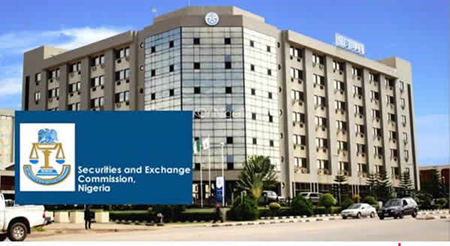
The Securities and Exchange Commission (SEC) announced that it has directed all operators within the capital market to freeze the assets of 13 entities linked to terrorism financing.
Those affected include 10 individuals and three companies. Their names were recently added to the Nigeria Sanctions List by the Nigeria Sanctions Committee.
The directive was contained in an official circular issued to capital market stakeholders. It referenced the Terrorism (Prevention and Prohibition) Act, 2022 as the legal basis for the action. Under the law, authorities are empowered to freeze assets tied to designated persons or groups without prior notice.
According to the Commission, the order takes immediate effect and must be enforced without delay. It stressed that all financial market participants are bound by the directive and must comply fully.
“The directive to freeze accounts and halt all transactions with the flagged entities is binding on all capital market operators and stakeholders,” the Commission stated.
Operators have been instructed to quickly identify accounts linked to the listed individuals and entities. They are to freeze such accounts instantly and block any ongoing or future transactions. In addition, all affected assets and attempted dealings must be reported to the Nigeria Sanctions Committee Secretariat.
The SEC warned that there is no room for delay. It emphasised that compliance must be immediate and decisive, noting that any hesitation could weaken efforts to disrupt illicit financial flows.
Further details showed that some of the individuals involved had prior convictions related to terrorism financing. These convictions were handed down by the Abu Dhabi Federal Court of Appeal in April 2019. The cases were linked to activities involving the extremist group Boko Haram.
Authorities revealed that the offences included raising funds in Dubai and transferring the money into Nigeria to support terrorist operations. Sentences ranged from 10 years in prison to life imprisonment, reflecting the seriousness of the crimes.
The Commission also raised concerns about the use of corporate entities as channels for illegal financial flows. It noted that some of the affected companies were used to move funds across borders, masking the true purpose of the transactions.
“This highlights a pattern where corporate vehicles are used as channels for financial flows, reinforcing the need for heightened scrutiny of business entities within the financial system,” the SEC said.
The regulator explained that the asset freeze is not meant as punishment but as a preventive step. The goal is to cut off financial lifelines that could be used to fund terrorism before such funds are deployed.
“The SEC also emphasised that the asset-freezing mechanism is preventive rather than punitive, designed to disrupt financial support systems for terrorism before funds can be deployed,” the statement noted.
The Commission issued a strong warning to operators who fail to comply. It said sanctions for disobedience could include both civil and criminal penalties, alongside serious reputational damage.
“The implications for non-compliance are severe, including both civil and criminal liabilities, as well as reputational damage for institutions found wanting,” it stated.
In a broader move, the directive extends beyond traditional financial institutions. It also covers Designated Non-Financial Businesses and Professions, widening the scope of enforcement across the economy.
According to the SEC, this signals a more aggressive and comprehensive approach to tackling money laundering and terrorism financing in Nigeria. The Commission reaffirmed its zero-tolerance stance and called for stronger monitoring systems within the capital market.
Operators have also been advised to upgrade their systems to allow for real-time name screening, asset tracking, and prompt reporting. Compliance teams are expected to act swiftly, without notifying affected clients in advance.
“It has to be noted that failure to comply not only exposes firms to regulatory sanctions but also risks damaging their credibility in both domestic and international markets,” the Commission added.Nigerian investment opportunities